
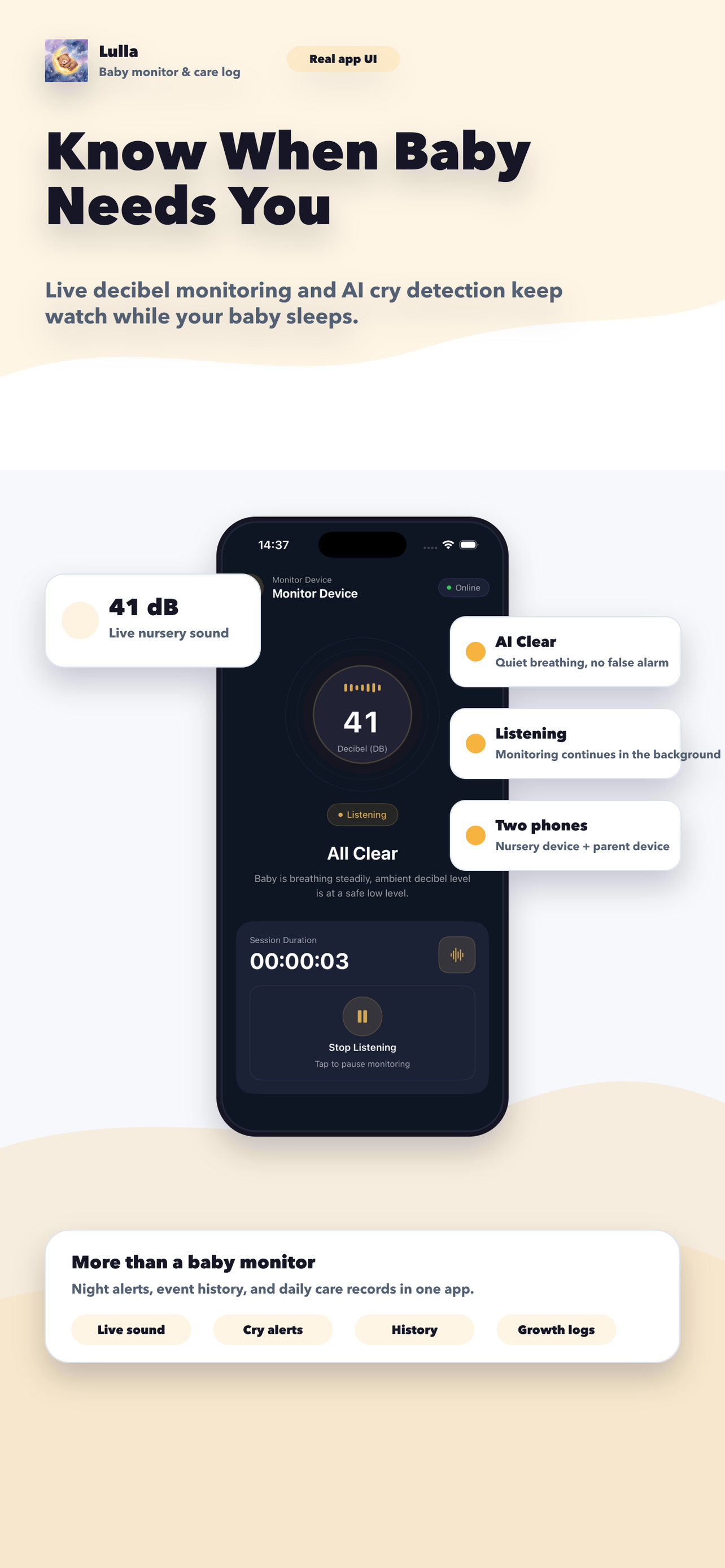
To reduce room noise for a baby monitor, start with placement. Keep the listening device away from fans, vents, sound machines, and crib rails that can transfer vibration. Then look at the room habits that create repeat noise, such as doors clicking, laundry humming nearby, or a sound machine pointed directly toward the phone. Most false alerts happen because the environment is messy, not because the monitor is bad. A good monitoring setup combines smart placement, lower background noise, and review tools that help you tell the difference between room sounds and meaningful crying.
Start with placement, not settings
When parents get too many false alerts, the instinct is usually to change sensitivity first. That can help, but placement usually has a bigger impact.
Try moving the listening phone farther from fans, humidifiers, vents, and hard surfaces that bounce or amplify noise. Small changes in distance can make a surprising difference.
The most common noise sources
Once you remove the predictable noise sources, the real alerts become easier to trust.
Check for these first:
- Air vents or fans pointed toward the device
- White-noise machines placed too close to the listening phone
- Crib or furniture vibration touching the surface under the phone
- Doors, hallways, or appliances that create repeat background spikes
Why review tools matter
Even with a better setup, parents still need to know what actually happened. A monitor that lets you review events is far more useful than one that simply buzzes and disappears.
When you can look back at cry events and compare them with the room setup, you can refine the system instead of guessing night after night.
Build a cleaner nightly system
Consistency helps. Charge both phones before bedtime, keep the listening phone in the same place, and avoid moving noisy items around the nursery every night.
A stable setup reduces both technical surprises and mental load. Parents need fewer things to troubleshoot when they are already tired.
FAQ
Should the baby monitor phone be close to the crib?
It should be close enough to hear clearly, but not so close that every rustle, vibration, or nearby machine sound becomes exaggerated. A short test during the day usually helps you find the sweet spot.
Can white noise cause false baby monitor alerts?
Yes, especially if the sound machine is too close or aimed toward the listening device. Placement matters as much as volume.
A calmer monitoring setup starts with cleaner room conditions and smart phone placement, not only with changing sensitivity.
Lulla fits best when parents want to hear important cries sooner and keep the rest of baby care organized in the same place. This article is for education only and is not a substitute for medical advice.